US Strategy to Cut Hormuz Dependence & Stabilise Oil
The US and allies are accelerating pipelines, export terminals, and new trade corridors like IMEC to reduce global reliance on the Strait of Hormuz.
•TradeRadarNews Australia Editorial
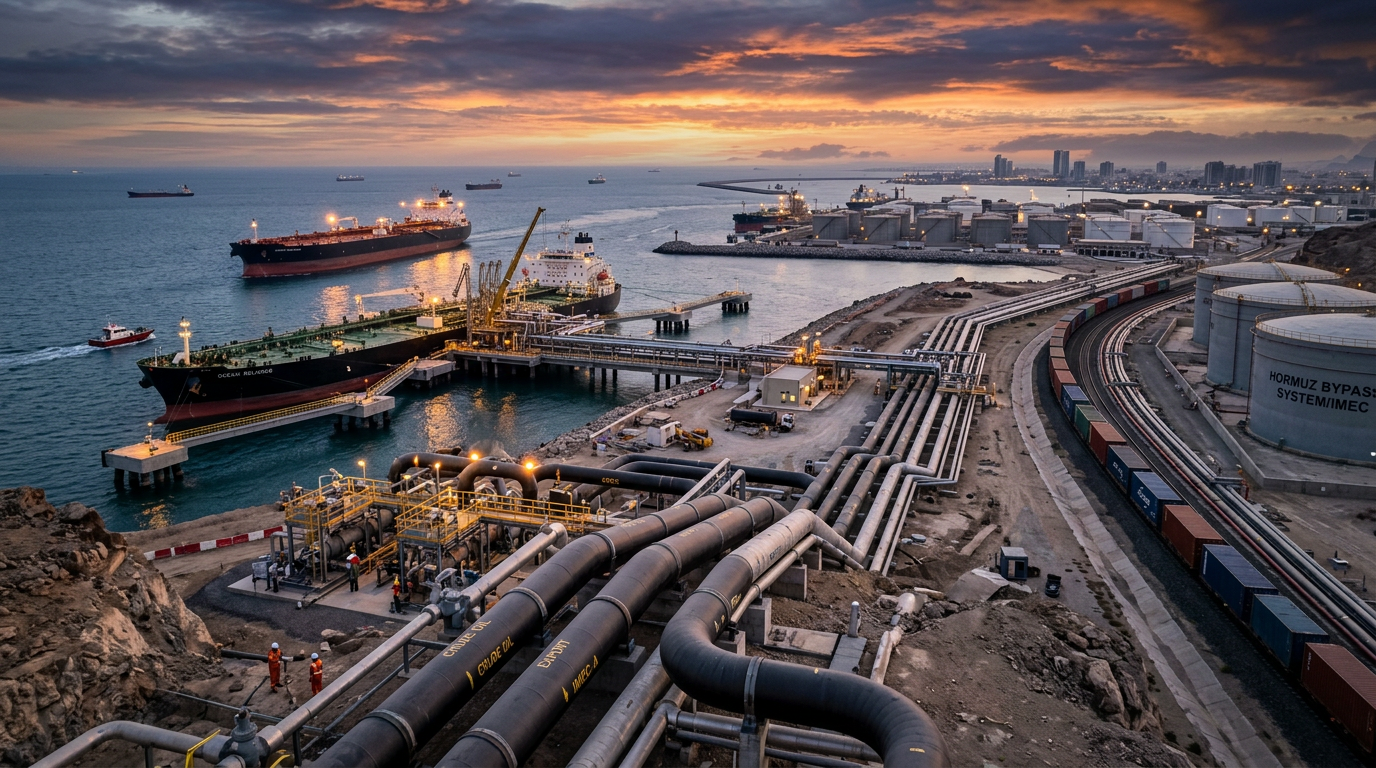
The United States, in collaboration with its international allies, is vigorously pursuing a strategic initiative aimed at diminishing global reliance on the Strait of Hormuz. This concerted effort is designed to undermine Iran's capacity to disrupt vital oil markets and, concurrently, to insulate the world from potential energy price volatility. The comprehensive plan, spearheaded by Washington, involves a multi-pronged approach focusing on infrastructure development and global supply diversification.
Central to this strategy is the significant expansion of pipeline and export terminal capabilities within key Middle Eastern nations. Saudi Arabia and the United Arab Emirates are seeing accelerated development in their oil transport infrastructure, enhancing their ability to move crude independently of the Strait. Furthermore, new export routes are being meticulously planned and implemented from Iraq, connecting its vast oil reserves to Turkey and Syria. These alternative pathways are crucial in creating a more resilient and diversified energy supply network.
Perhaps the most ambitious component of this infrastructure drive is the fast-tracking of the India–Middle East–Europe Economic Corridor (IMEC). This monumental project is specifically engineered to establish a robust trade route that entirely bypasses the Strait of Hormuz, offering a secure and efficient alternative for energy and goods transit between these three vital economic blocs. The IMEC is not merely about oil; it represents a comprehensive effort to reshape global trade dynamics and reduce geopolitical choke points.
Beyond infrastructure, Washington's strategy actively seeks to broaden the spectrum of global oil suppliers. A significant focus is being placed on augmenting oil production across various countries in the Americas. This diversification is intended to ensure that any future disruptions emanating from the Strait of Hormuz would have a considerably smaller impact on international energy markets and, crucially, on global oil prices. By fostering a more dispersed and resilient supply chain, the US aims to mitigate the leverage held by any single region or nation over the world's energy supply.
This proactive stance by the US and its allies reflects a long-term commitment to energy security and market stability. The investments in infrastructure, the development of new trade corridors like IMEC, and the strategic push for broader oil production aim to create a global energy landscape that is less susceptible to geopolitical tensions and more assured in its capacity to meet demand. The implications for the oil price and future energy stability are profound, promising a more predictable environment for consumers and industries worldwide.