IAEA's Iran Nuclear Programme: A Critical New Challenge
IAEA faces a critical new challenge in verifying Iran's nuclear programme, including locating and ensuring downblending of 450kg of enriched uranium.
•TradeRadarNews Australia Editorial
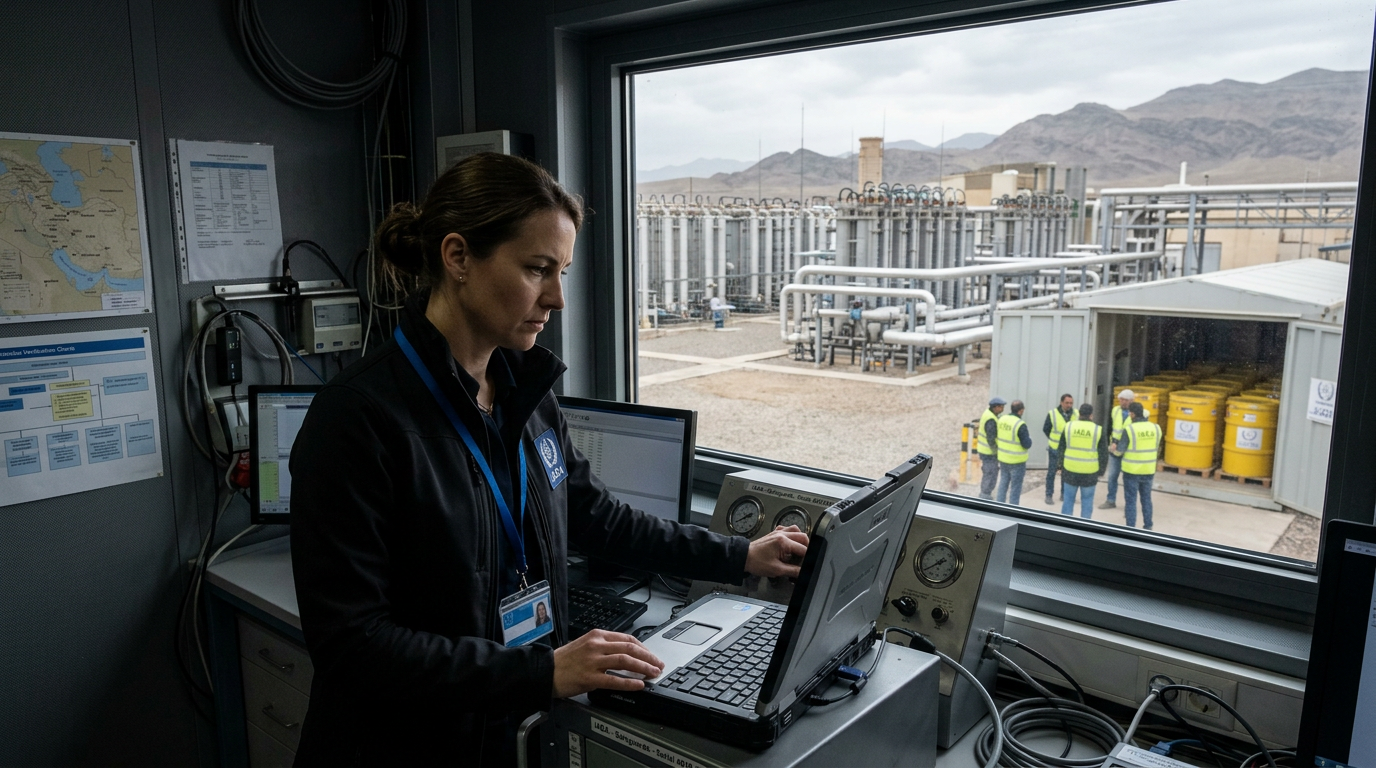
The International Atomic Energy Agency (IAEA) is currently grappling with a complex nuclear conundrum within Iran, as reported by RFE/RL staff on 26th June 2026. Experts in the field stress the absolute necessity of comprehensive and unfettered access for IAEA inspectors to accurately verify Iran's enriched uranium stockpiles, ongoing enrichment activities, and the entirety of its nuclear infrastructure.
A significant hurdle facing the agency involves the precise location and subsequent verification of approximately 450 kilograms of highly enriched uranium. A key objective for the IAEA will be to ensure this material is effectively `downblended`, a process that reduces its enrichment level, thereby preventing its potential re-enrichment to weapons-grade purity. This task is paramount for international non-proliferation efforts.
Former officials, who possess a deep understanding of nuclear safeguards, contend that re-establishing the IAEA's `continuity of knowledge` presents one of the most formidable challenges the agency has ever encountered. This continuity has been severely disrupted by recent military strikes in the region and subsequent restrictions on inspector access. Rebuilding this chain of detailed understanding of Iran's nuclear programme is critical for effective oversight.
The implications of this ongoing situation are far-reaching. The global community, and indeed financial markets, watch closely as any developments regarding Iran's nuclear capabilities can have significant geopolitical and economic consequences. The price of crude oil, for instance, often reacts sharply to tensions in the Middle East, underscoring the interconnectedness of these issues.
Effective verification by the IAEA is not merely a technical exercise; it is a cornerstone of international security. Without transparent and verifiable information, the risk of proliferation increases, leading to potential instability in a volatile region. Therefore, the agency's ability to navigate these challenges successfully is of paramount importance.
The current `nuclear puzzle` in Iran underscores the continuous efforts required to maintain global non-proliferation norms. The IAEA's role as an independent international organisation is crucial in providing objective assessments and ensuring compliance with nuclear safeguard agreements. The coming months will undoubtedly be critical in determining the trajectory of Iran's nuclear programme and the effectiveness of international oversight.