AI's trillion-dollar energy demand set to power new market
Kevin O'Leary eyes the £4 trillion infrastructure unlocking AI's potential, focusing on energy solutions to power the next tech boom.
•TradeRadarNews Australia Editorial
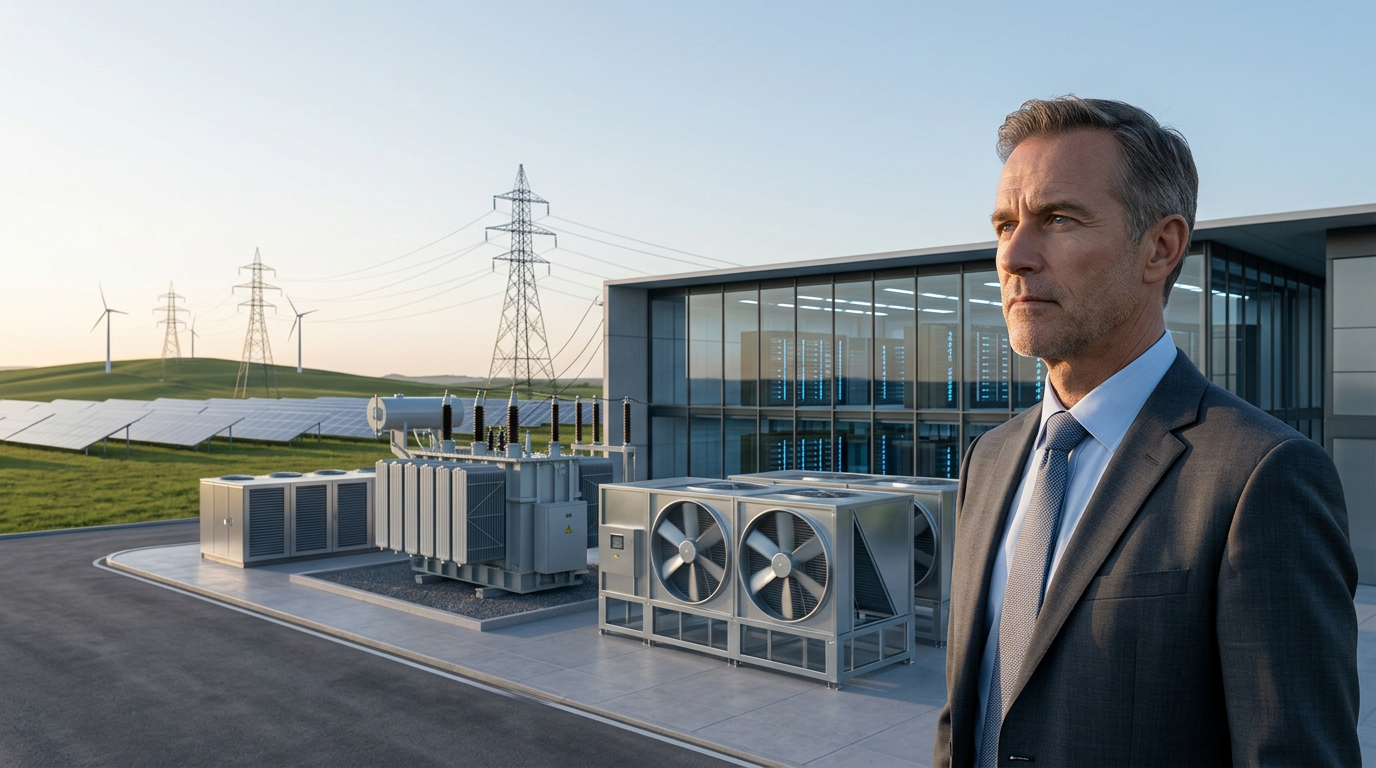
Kevin O'Leary, of *Shark Tank* fame, is not directly investing in artificial intelligence (AI) itself, but rather in the substantial infrastructure needed to support its growth. He is reportedly focusing on the estimated £4 trillion (approximately $5 trillion) required for this infrastructure, which is attracting significant capital flows. This strategic shift highlights a growing realisation that the AI boom's biggest bottleneck isn't software or semiconductors, but energy.
O'Leary's investment in Bitzero (NASDAQ: AIBZ) exemplifies this approach. Bitzero is actively addressing the critical power challenge posed by AI's escalating demands. While many market participants were preoccupied with AI software and chip development, Bitzero appears to have anticipated the immense energy requirements of the future.
The rapid expansion of AI technologies is creating unprecedented demand for electrical power. Data centres, which house the powerful servers necessary for AI computations, consume vast amounts of electricity. As AI models become more complex and widespread, this energy consumption is projected to rise exponentially, putting immense pressure on existing power grids.
Energy infrastructure, including power generation, transmission, and distribution, is therefore becoming a crucial investment sector. Companies that can provide reliable, scalable, and sustainable energy solutions for AI operations are poised for significant growth. This includes innovations in renewable energy sources, energy storage systems, and more efficient power management technologies.
Bitzero's early focus on this energy chokepoint could potentially position it as a key player in this burgeoning market. Their foresight in addressing power constraints before they become a critical issue for the broader AI industry may prove to be a strategic advantage. This demonstrates a clear understanding that the future of AI is intrinsically linked to the future of energy production and distribution.
The investment strategy championed by figures like O'Leary suggests a significant pivot in the investment community. It signifies a move beyond the immediate technological advancements of AI to the foundational requirements that will enable its sustained growth. This broader perspective acknowledges that the AI revolution is as much an energy revolution as it is a technological one.
For investors, this trend opens up new opportunities in sectors traditionally considered separate from technology. Companies involved in power generation, advanced battery technologies, and grid infrastructure may see increased interest and investment as the AI industry continues its trajectory. The convergence of AI and energy is shaping up to be a defining economic theme of the century, with substantial capital being directed towards solving the monumental power challenges presented by artificial intelligence.